Enterprise SaaS · Brand Strategy
Brand Unification
Role
Head of Design
Scope
Brand Strategy · Identity · Dev
Platforms
Marketing Site + CMS
Status
Live — full company rollout
Problem
Two brands. One company. Zero clarity.
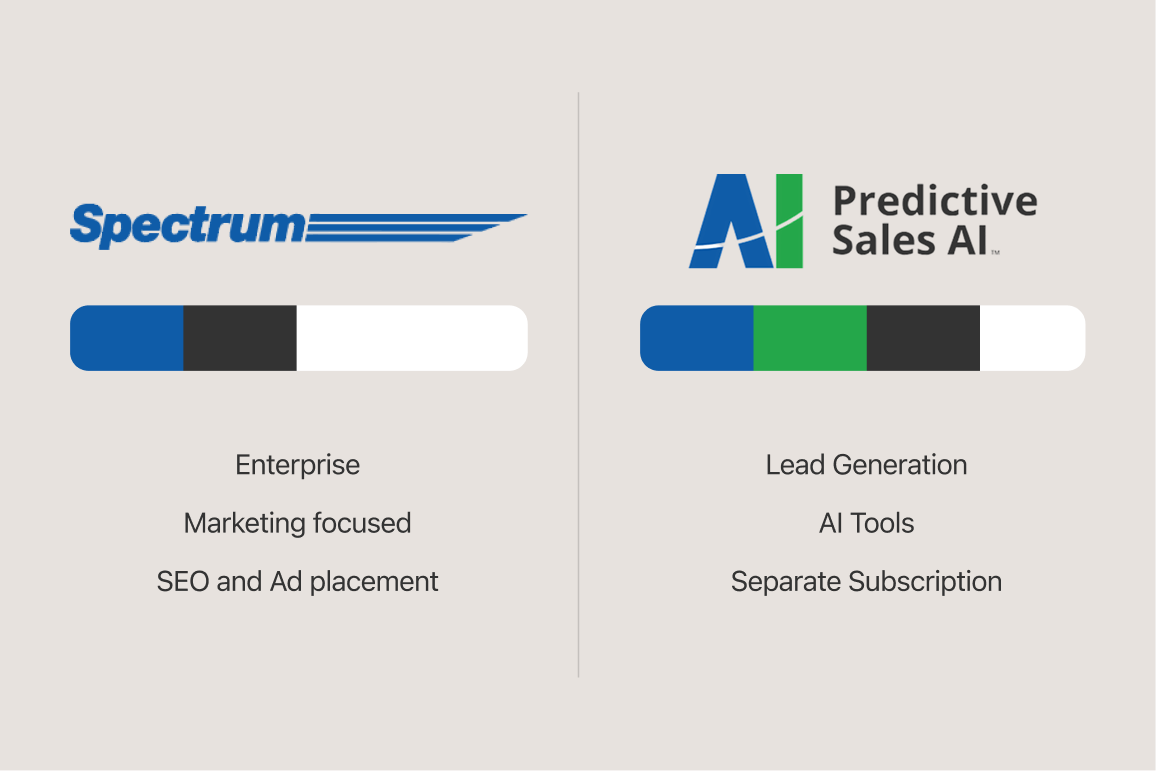
PSAI operated two brands under the same roof — Spectrum, handling enterprise websites, marketing, and SEO, and PSAI, a lead generation software suite.
Customers couldn't understand the relationship between the two. Were they the same company? Different products? A parent and subsidiary? The confusion was costing sales conversations before they started.
Internally, teams were context-switching between two identities, two design systems, two codebases — with no coherent thread connecting them.
Strategic Insight
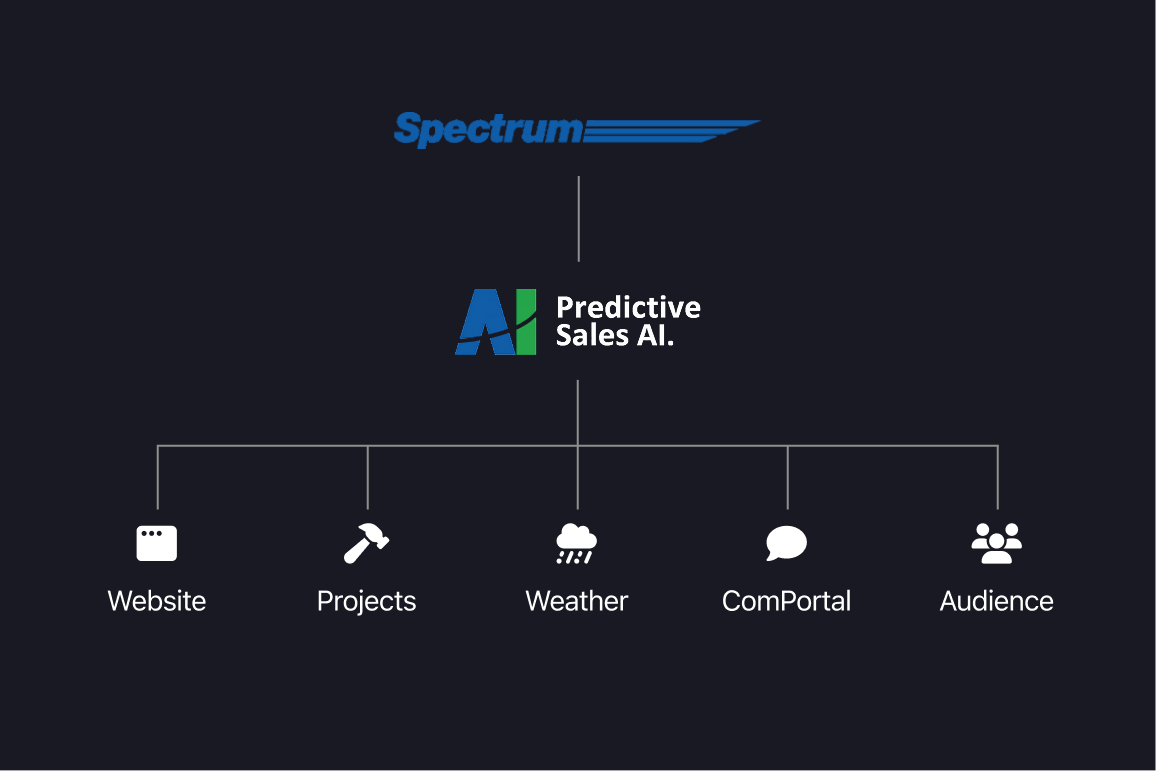
Make Spectrum the silent parent. Brand everything under PSAI.
This was my call. I proposed the Google model to the C-suite — one visible brand (PSAI) with Spectrum operating as the silent infrastructure behind it.
Customers would interact with one identity, one product family, one coherent experience. The parent brand wouldn't need to compete for attention — it would let the product do the work.
Pitched directly to the CEO, CFO, and VP. Got the green light.
Approach
Evolutionary, not revolutionary.
As Head of Design, I owned design direction — but it was shaped by PM input on timelines, sales insight on client pain points, and engineering feedback on feasibility. The work spanned both platforms simultaneously.
Even with full design ownership, shipping required tight coordination with engineering teams on both platforms, PM alignment on rollout sequencing, and sign-off from client services before anything went live.
The brand direction was deliberate: evolutionary, not reinvented. Clients and internal teams needed continuity. A radical rebrand of an established B2B product creates confusion, not excitement. We modernized the system without destabilizing trust.
Architecture first, design second. Getting alignment on the brand model before opening Figma kept scope from drifting once execution started.

Outcome
Presented to the full company. Now live.
C-Suite
Pitched to CFO, CEO, and VP — approved first round, no revisions
Live
Strong client and internal reception across the full company rollout
Unlocked
Unified brand cleared the path for self-serve tools and a larger product roadmap
Reflection
The architectural decision was the hardest part.
Brand execution is tractable — a skilled designer can execute typography, color, and layout. The hard part is the decision upstream: which brand leads, which brand recedes, and how you sell that to a leadership team that's emotionally attached to both names.
Getting in front of the C-suite with a model — not just moodboards — was the right move. It reframed the conversation from "which logo do we keep" to "here's how the business benefits from one unified identity."
The execution followed naturally. The decision was the work.
What I'd do differently
Build the design token system before touching any UI — not after. It would have made theming, white-labeling, and the admin overhaul dramatically faster. Architectural decisions in design systems have the same compounding value as architectural decisions in brand.
What worked
Pitching the architectural model early — before design — got executive buy-in fast and eliminated scope creep. When everyone agrees on the strategy, execution decisions practically make themselves.